
The modern world bombards us with an incessant stream of information. From academic texts and professional reports to news articles and social media feeds, the ability to process large volumes of text efficiently has become not just a desirable skill but a necessity. For many, the desire to read faster often comes paired with the crucial concern of actually remembering what they’ve read. This article examines the complex subject of speed reading, exploring the science behind it, effective techniques, common hurdles, and how to cultivate a mind capable of both rapid assimilation and lasting comprehension.
The act of reading is a complex neurological process. It’s not simply about recognizing letters and words; it involves decoding, comprehending meaning, and integrating new information with existing knowledge. Our eyes, rather than moving smoothly across a page, actually jump in short bursts called saccades, pausing briefly on specific points to gather visual information. These pauses are known as fixations. The duration and frequency of these fixations directly impact reading speed.
Contents
- 1 The Physiology of Visual Perception
- 2 The Role of Cognitive Processing
- 3 Minimizing Fixations and Expanding Visual Span
- 4 Reducing Subvocalization
- 5 Skimming and Scanning Strategies
- 6 Habitual Reading Patterns
- 7 Lack of Focus and Concentration
- 8 Fear of Losing Comprehension
- 9 Active Recall and Spaced Repetition
- 10 Making Meaningful Connections
- 11 Pre-Reading and Previewing
- 12 Engaging with the Text Actively
- 13 Post-Reading Summary and Reflection
- 14 Visual Acuity and Perceptual Training
- 15 Cognitive Flexibility and Adaptability
- 16 Building Reading Stamina
- 17 Dedicated Reading Time
- 18 Applying Techniques to Various Materials
- 19 Gradual Implementation and Patience
- 20 Speed Reading Apps and Software
- 21 Online Courses and Programs
- 22 Physical Tools and Guides
- 23 Continuous Practice and Reinforcement
- 24 Setting New Reading Goals
- 25 Mindful Reading and Self-Assessment
The Physiology of Visual Perception
When we read, our eyes take in visual information during these fixations. The brain then processes this information to construct meaning. Several factors influence how efficiently this step occurs. The size of our visual span, the amount of text we can perceive in a single fixation, plays a significant role. A narrower visual span means more fixations are required to cover the same amount of text, thereby slowing down our reading. Furthermore, habituated reading patterns, often developed in childhood for foundational literacy, can sometimes hinder faster reading later in life. These patterns might involve subvocalization, the silent or audible recitation of words in one’s head, which limits reading speed to the pace of speech.
The Role of Cognitive Processing
Beyond the visual aspect, cognitive processing is paramount. This involves recognizing words and understanding their relationships, inferring meaning, and making connections. The speed at which our brains can process this information, known as cognitive processing speed, is another critical determinant of reading efficiency. It’s a delicate dance between visual input and mental interpretation.
Numerous techniques have been developed to help individuals break free from slower reading habits and unlock their potential for faster comprehension. These methods often focus on optimizing eye movements, reducing unnecessary cognitive effort, and improving the overall efficiency of the reading process.
Minimizing Fixations and Expanding Visual Span
A cornerstone of speed reading techniques involves training the eyes to make fewer, larger jumps. Instead of fixating on every single word, the aim is to broaden the visual span to take in chunks of words or even entire phrases in a single fixation. This can be achieved through exercises that encourage wider eye movements and train the brain to process more information at once. Some methods involve using a finger or a pen as a visual guide to pace the eyes and encourage them to move more fluidly and quickly across the page.
Reducing Subvocalization
Subvocalization, the internal voice that reads along with the text, is a significant bottleneck for many aspiring speed readers. While helpful for foundational reading, it ties our reading speed to our speaking speed. Techniques to combat subvocalization include consciously trying to “hear” the words mentally without speaking them or using a metronome to set a faster pace that discourages the lingering of the internal voice. Engaging in activities that occupy the vocal cords, such as humming softly, can also help to disrupt this habit.
Skimming and Scanning Strategies
Beyond direct reading, skimming and scanning are powerful tools for quickly extracting key information. Skimming involves quickly reading through a text to get a general understanding of the topic and main ideas. Focusing on headings, subheadings, the first and last sentences of paragraphs, and keywords helps achieve this. Scanning, on the other hand, is used to locate specific pieces of information, like names, dates, or facts, by moving your eyes rapidly down the page, looking for visual cues. These techniques are not replacements for deep reading but are invaluable for managing information overload.
While the prospect of reading faster is appealing, several common obstacles can hinder progress. Recognizing and systematically addressing these roadblocks is essential for sustained improvement.
Habitual Reading Patterns
As mentioned earlier, deeply ingrained reading habits, often formed during our early education, can be a primary obstacle. The tendency to read word-by-word, to subvocalize, and to reread sentences are all habits that slow us down. Breaking these habits requires conscious effort and consistent practice with alternative methods. It’s about rewiring our ingrained responses to the written word.
Lack of Focus and Concentration
The ability to maintain focus is crucial for both speed and comprehension. Distractions, both external (noise, notifications) and internal (wandering thoughts), can disrupt the reading flow, forcing the reader to reread or lose track of the material. Developing strategies to improve concentration, such as creating a dedicated reading environment or practicing mindfulness exercises, can significantly boost reading efficiency.
Fear of Losing Comprehension
Perhaps the most pervasive obstacle is the fear that reading faster will inevitably lead to poorer understanding. This anxiety can cause readers to self-sabotage, unconsciously slowing themselves down to ensure they “don’t miss anything.” The key is to understand that speed reading, when implemented effectively, actually enhances comprehension by promoting more active engagement with the text and reducing superficial processing. Evidence of successful comprehension at faster speeds can overcome this confidence issue.
Speed without substance is ultimately meaningless. The true goal of speed reading is not just to consume words rapidly but to absorb and retain the information contained within them. Therefore, the ability to recall and apply what has been read is paramount.
Active Recall and Spaced Repetition
To ensure information sticks, active recall techniques are invaluable. Instead of passively re-reading, actively try to retrieve information from your memory. After reading a section or chapter, close the book and try to summarize the main points, answer questions about the material, or explain it to someone else. Spaced repetition, a method of reviewing information at increasing intervals, also plays a vital role in long-term memory consolidation.
Making Meaningful Connections
Our brains are wired to remember information that is relevant or connected to what we already know. When reading, actively seek connections to your existing knowledge, experiences, or other texts. Ask yourself how the new information fits into the bigger picture or how it contradicts or supports what you already believe. This process of making meaningful connections transforms raw data into integrated knowledge.
Understanding what you’re reading is just as important as reading faster. Several strategies can be employed to ensure that increased reading speed translates to improved comprehension.
Pre-Reading and Previewing
Before diving into a text, take a few moments to preview it. Look at the title, headings, subheadings, introduction, and conclusion. Skim the first and last sentences of paragraphs. This preview primes your brain for the content, establishing a framework for understanding and making it easier to grasp the main ideas as you read.
Engaging with the Text Actively
Passive reading is a recipe for poor comprehension. Engaging with the text means interacting with it, not just letting your eyes glide over the words. This can involve highlighting key passages, taking notes in the margins, asking questions, and forming opinions about what you are reading. When reading digitally, utilize annotation tools to mark up the text.
Post-Reading Summary and Reflection
After finishing a text, spend some time summarizing the main points in your words. Reflect on what you’ve learned, how it relates to your existing knowledge, and what questions you still have. This reflection process helps solidify understanding and identify any areas where comprehension might be weak.
Training your brain for faster reading is akin to training for any other skill; it requires consistent practice and targeted exercises. It’s about building new neural pathways and strengthening existing ones.
Visual Acuity and Perceptual Training
Exercises that focus on improving visual acuity and perceptual speed can be beneficial. These might include drills designed to enhance peripheral vision, increase the speed of visual processing, or improve the ability to rapidly identify patterns. Many speed reading programs incorporate such exercises.
Cognitive Flexibility and Adaptability
A key aspect of faster reading is the brain’s ability to adapt its processing speed and strategy based on the text and the goal. Training your brain to be cognitively flexible allows you to switch between deeper reading and faster skimming or scanning as needed. This involves practicing various reading techniques and being mindful of your processing.
Building Reading Stamina
Just as physical endurance needs to be built, so does mental endurance for reading. Gradually increasing the amount of time you spend reading at a faster pace can help build stamina. Start with short bursts and slowly extend them, allowing your brain to adapt to the increased cognitive load.
The true power of speed reading lies in its integration into everyday life. Making it a habit, rather than an occasional exercise, is key to long-term benefits.
Dedicated Reading Time
Allocate specific times during your day for reading. This could be during your commute, your lunch break, or before bed. Even short, consistent periods of focused reading can yield significant results. Treat this time as a priority, minimizing distractions.
Applying Techniques to Various Materials
Don’t limit your speed reading practice to specific speed reading exercises. Apply the techniques you learn to all the reading material you encounter, from emails and news articles to reports and leisure reading. The more you practice, the more natural the process will become.
Gradual Implementation and Patience
It’s important to approach speed reading with patience and a commitment to gradual improvement. Attempting to drastically increase your speed overnight is unrealistic and can be counterproductive. Focus on making small, consistent gains, and celebrate your progress along the way.
Various tools and resources can aid in the journey to becoming a faster, more effective reader. These range from digital applications to traditional physical aids.
Speed Reading Apps and Software
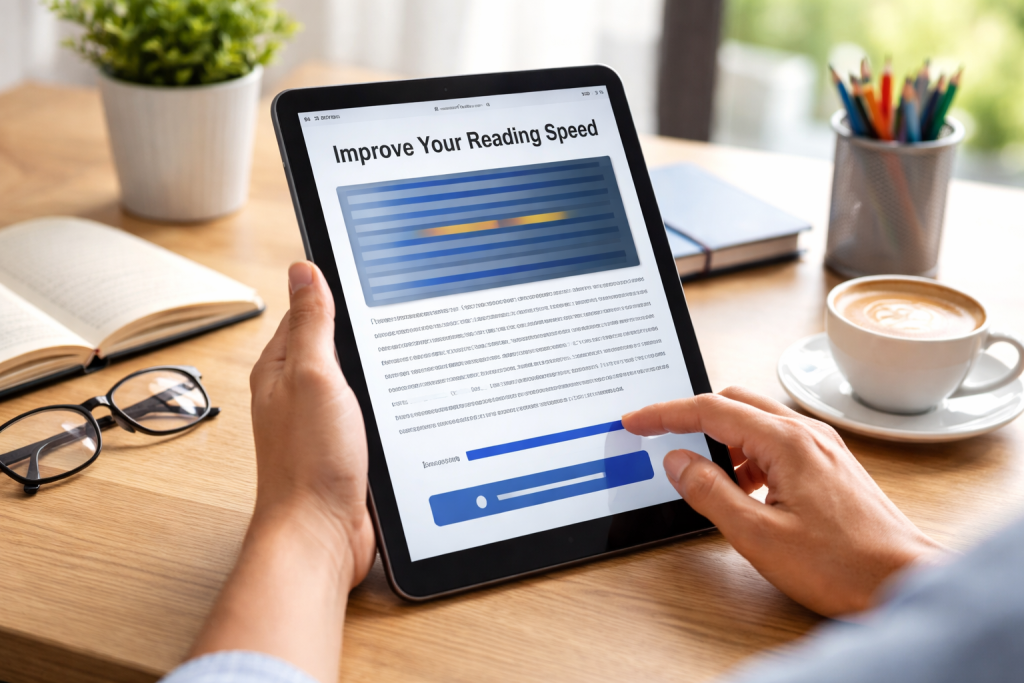
Numerous speed reading applications are available for smartphones, tablets, and computers. These often provide structured lessons, practice exercises, and progress tracking. Some utilize technologies like Rapid Serial Visual Presentation (RSVP), which flashes words on a screen at a controlled pace, forcing the reader to adapt.
Online Courses and Programs
Comprehensive online speed reading courses can offer in-depth instruction, guided practice, and often a community forum for support. These programs typically cover the science behind speed reading, various techniques, and strategies for retention.
Physical Tools and Guides
Even in the digital age, traditional tools can be effective. A simple finger or pen can act as a pacer, guiding your eyes across the text. Eye-tracking exercises, often found in books or online, can also help improve eye muscle control and movement efficiency.
Achieving faster reading speeds is a fantastic accomplishment, but maintaining and further improving that skill requires ongoing effort and a commitment to lifelong learning.
Continuous Practice and Reinforcement
The saying “practice makes perfect” also applies to speed reading. Regularly engage in reading at your enhanced pace and continue to employ the techniques you’ve learned. This consistent reinforcement prevents skills from atrophying and encourages further refinement.
Setting New Reading Goals
As your reading speed increases, challenge yourself with new goals. This could involve tackling more complex texts, increasing your reading volume, or aiming for even higher comprehension levels at your current speed. Setting ambitious yet achievable goals keeps the learning process dynamic and engaging.
Mindful Reading and Self-Assessment
Periodically, take a moment to assess your reading process. Are you still encountering the same obstacles? Are you noticing any dips in comprehension? Being mindful of your progress and identifying areas that may need more attention will help you adapt and continue to grow.
The benefits of becoming a faster reader and retaining more information are profound. In an age defined by information, the ability to process and understand text efficiently can lead to academic success, career advancement, and a richer personal life. It empowers individuals to learn more, make better-informed decisions, and engage more deeply with the world around them. By understanding the science, employing effective techniques, overcoming obstacles, and committing to continuous practice, anyone can unlock their potential for faster reading and more profound comprehension.

About the Author
Muqadas Ali is the founder of SmartLearningWay with over 5 years of experience in blogging and digital learning. His mission is to help students and professionals improve productivity using simple methods and modern tools.


