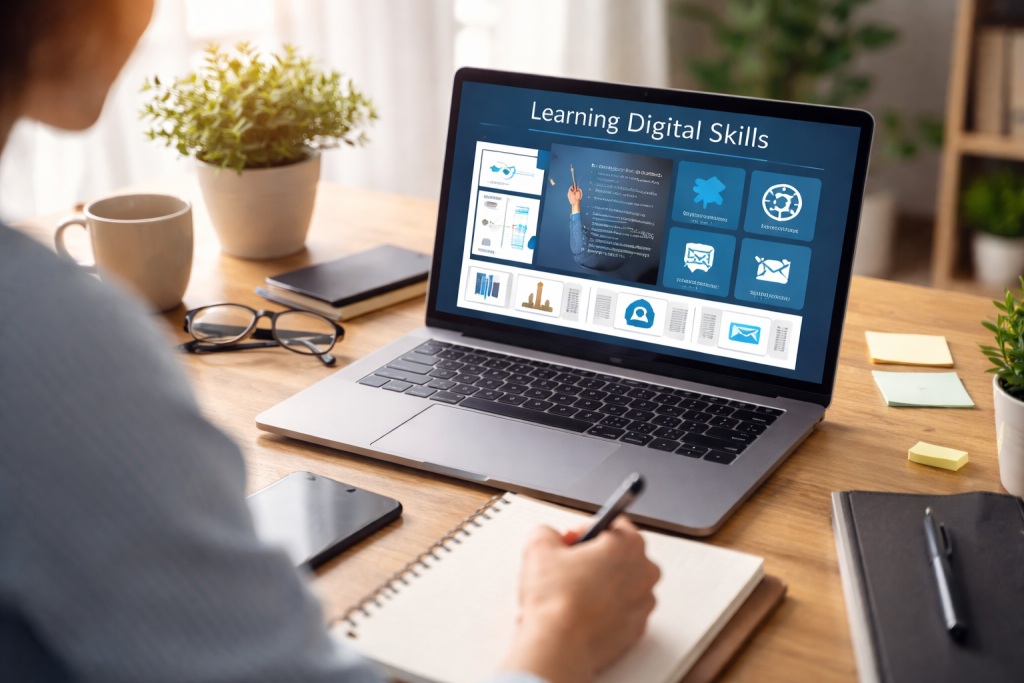
In an increasingly digital world, the ability to navigate and leverage technology is no longer a niche skill but a fundamental requirement for professional success. The work landscape has irrevocably changed, elevating digital proficiency to the forefront of career advancement. Whether you’re just starting your professional journey or aiming to elevate your existing career, a strategic approach to digital skill development is paramount. This comprehensive guide will walk you through the essential steps, transforming you from a digital novice into a highly sought-after expert.
Contents
- 1 Understanding the Importance of Digital Skills in Today’s Job Market
- 2 Identifying Your Current Digital Skill Level
- 3 Setting Clear Goals for Developing Your Digital Skills
- 4 Choosing the Right Learning Resources and Tools
- 5 Building a Strong Foundation in Basic Digital Skills
- 6 Mastering Advanced Digital Skills for Career Advancement
- 7 Seeking Mentorship and Networking Opportunities
- 8 Putting Your Digital Skills to Use in Real-world Projects
- 9 Overcoming Challenges and Staying Motivated in Your Learning Journey
- 10 Showcasing Your Digital Skills to Potential Employers or Clients
Understanding the Importance of Digital Skills in Today’s Job Market
The modern job market operates on digital platforms, driven by data and powered by interconnected technologies. Failing to adapt to this reality is akin to trying to navigate a bustling city with only a paper map and no compass. Employers across every industry are actively seeking individuals who possess a strong grasp of digital tools and concepts.
The Digital Divide: A Growing Chasm
Those without adequate digital skills face a significant disadvantage, often limited to roles that are becoming increasingly automated or outsourced. The digital divide isn’t just about access to technology; it’s about the ability to effectively utilize it. Bridging this gap is crucial for personal and professional growth.
Enhanced Employability and Career Progression
The demand for digital literacy spans every sector, from marketing and finance to healthcare and hospitality. Mastering digital skills not only opens doors to a wider array of opportunities but also positions you for higher-paying roles and faster career progression. Individuals who can effectively manage social media campaigns, analyze complex datasets, or develop engaging online content are invaluable assets to any organization.
Future-Proofing Your Career
Rapid technological advancements mean that cutting-edge skills a few years ago might be commonplace today. By continuously developing your digital repertoire, you essentially future-proof your career. You become adaptable, resilient, and ready to embrace the next wave of innovation, ensuring long-term relevance in a constantly evolving job market.
Identifying Your Current Digital Skill Level
Before embarking on any learning journey, a realistic assessment of your current capabilities is essential. This self-evaluation will help you pinpoint areas of strength and, more importantly, areas that require improvement.
Taking a Digital Skills Inventory
Start by creating a comprehensive inventory of the digital tools and platforms you currently use, both professionally and personally. Consider everything from basic email management and word processing to more advanced software like graphic design suites or coding environments. Be honest about your proficiency level with each.
Utilizing Online Assessment Tools
Numerous online platforms offer free or low-cost digital skills assessments. These tools can provide a more objective evaluation of your abilities in various categories, such as data analysis, cybersecurity awareness, or digital marketing fundamentals. The results often highlight specific areas where you might be weaker than you perceived.
Seeking Feedback from Peers or Mentors
An invaluable way to gain insight into your digital skill level is to solicit feedback from colleagues, managers, or mentors. They can offer a fresh perspective on your strengths and weaknesses, often identifying areas you might have overlooked. Constructive criticism, when received openly, can be a powerful catalyst for growth.
Setting Clear Goals for Developing Your Digital Skills
Vague aspirations rarely lead to tangible results. Once you understand your current standing, the next step is to define precise, measurable, achievable, relevant, and time-bound (SMART) goals for your digital skill development.
Defining Specific, Measurable, and Achievable Objectives
Instead of saying, “I want to get better at digital marketing,” refine it to “I want to be able to create and analyze a successful Google Ads campaign within six months.” This specificity provides a clear target and a way to track your progress. Break down larger goals into smaller, manageable milestones.
Aligning Goals with Career Aspirations
Your digital skill development should directly support your broader career objectives. If your goal is to become a data scientist, then mastering Python, R, and statistical analysis tools should be high on your priority list. If you aim for a career in content creation, then video editing and SEO mastery are crucial.
Establishing Realistic Timelines
While ambition is important, setting unrealistic deadlines can lead to burnout and discouragement. Be honest with yourself about the time and effort you can realistically dedicate to learning. Remember that consistent, gradual progress is more effective than sporadic bursts of intense study.
Choosing the Right Learning Resources and Tools
The digital age offers an unprecedented abundance of learning resources. Navigating this vast landscape to select the most effective tools and platforms for your specific needs is a crucial step.
Exploring Online Courses and Certifications
Platforms like Coursera, Udemy, edX, LinkedIn Learning, and Google Skills Shop offer a wide array of courses, from introductory modules to advanced specializations. Many provide recognized certifications that can significantly bolster your resume and demonstrate your commitment to continuous learning.
Leveraging Free Online Tutorials and Blogs
A wealth of free information is available through YouTube tutorials, industry blogs, and open-source documentation. These resources are excellent for exploring new concepts, troubleshooting specific issues, and keeping up-to-date with emerging trends without a significant financial investment.
Attending Workshops and Webinars
Participating in live workshops and webinars offers the opportunity for interactive learning, direct engagement with instructors, and networking with fellow learners. These events often provide practical exercises and real-world case studies that can deepen your understanding.
Investing in Books and E-books
For a more in-depth and structured learning experience, traditional books and e-books remain invaluable resources. They often provide comprehensive coverage of a topic, allowing for a deeper theoretical understanding alongside practical application.
Building a Strong Foundation in Basic Digital Skills
Before attempting to run, you must first learn to walk. A solid foundation in basic digital skills is the bedrock upon which all advanced knowledge is built. Don’t underestimate the importance of these fundamental competencies.
Mastering Essential Office Productivity Suites
Proficiency in tools like Microsoft Office (Word, Excel, PowerPoint) or Google Workspace (Docs, Sheets, Slides) is non-negotiable. These applications form the backbone of nearly all professional communication, data management, and presentation creation.
Understanding Email Etiquette and Communication Tools
Effective email communication is a critical professional skill. This includes understanding appropriate tone, clear articulation, and efficient email management. Familiarity with collaborative communication platforms like Slack or Microsoft Teams is also increasingly important.
Beyond simply browsing, effective internet navigation involves critical thinking about sources, discerning reliable information, and understanding basic search engine optimization principles. Information literacy is crucial for research and problem-solving in any field.
Developing Basic Cybersecurity Awareness
In an era of increasing cyber threats, understanding fundamental cybersecurity principles is vital. This includes recognizing phishing attempts, practicing strong password hygiene, and understanding the importance of secure internet usage.
Mastering Advanced Digital Skills for Career Advancement
Once your foundation is firm, you can begin to specialize and acquire advanced digital skills that will truly differentiate you in the job market and propel your career forward.
Delving into Data Analytics and Visualization
The ability to collect, analyze, and interpret data is one of the most in-demand skills today. Tools like Excel, Tableau, Power BI, and even coding languages like Python or R for advanced statistical analysis, open up careers in data science, business intelligence, and market research.
Exploring Digital Marketing Strategies
From search engine optimization (SEO) and search engine marketing (SEM) to social media marketing and content marketing, a comprehensive understanding of digital marketing strategies is crucial for businesses aiming to reach their audience effectively.
Learning Web Development and Design
Whether it’s front-end development (HTML, CSS, JavaScript) for user interfaces or back-end development (Python, PHP, Ruby) for server logic, web development skills are highly valued. Understanding UI/UX design principles is also critical for creating engaging and user-friendly digital experiences.
Acquiring Cloud Computing Proficiency
With the widespread adoption of cloud platforms like AWS, Azure, and Google Cloud, proficiency in cloud computing is becoming increasingly important. This includes understanding cloud architecture, deployment, and management.
Understanding Artificial Intelligence and Machine Learning Fundamentals
Familiarity with the basics of AI and machine learning, even if not at an expert level, provides a significant advantage. Understanding how these technologies are applied can help you identify innovative solutions and adapt to future technological shifts.
Seeking Mentorship and Networking Opportunities
Learning in isolation can be challenging. Connecting with experienced professionals and building a strong network can accelerate your learning and open doors to new opportunities.
Finding a Digital Skills Mentor
A mentor can provide invaluable guidance, share real-world insights, and offer constructive feedback on your progress. Look for individuals who are experts in the specific digital skills you are trying to acquire and who are willing to share their knowledge generously.
Joining Online Communities and Forums
Platforms like Reddit, LinkedIn groups, and specialized online forums provide spaces to connect with other learners and experts in your field. These communities are excellent for asking questions, sharing knowledge, and staying updated on industry trends.
Attending Industry Events and Conferences
Conferences and workshops offer opportunities to learn from thought leaders, network with peers, and discover new technologies. These events can provide a boost of inspiration and connect you with potential collaborators or employers.
Putting Your Digital Skills to Use in Real-world Projects
Knowledge acquisition is one thing; practical application is another. The true test of your digital skills comes from applying them to real-world challenges.
Offer your skills to nonprofit organizations, local businesses, or even friends and family. This provides a low-stakes environment to practice your new abilities and build a portfolio of experience.
Building a Personal Project or Website
Create your own website, start a blog, develop a small application, or design a digital marketing campaign for a hypothetical product. These personal projects allow you complete creative control and provide tangible evidence of your skills.
Participating in Hackathons or Online Challenges
Hackathons are intensive events where individuals or teams collaborate to solve a problem using technology. They are excellent for fast-tracking your learning, working under pressure, and showcasing your problem-solving abilities.
Overcoming Challenges and Staying Motivated in Your Learning Journey
The path from novice to expert is rarely linear. You will inevitably encounter obstacles, but persistence and effective strategies can help you navigate these challenges.
Managing Time and Staying Consistent
Developing new skills requires dedicated time and effort. Create a realistic study schedule and stick to it. Consistency, even in small increments, is far more effective than sporadic intense sessions.
Dealing with Frustration and Imposter Syndrome
Learning new technical skills can be frustrating, and it’s common to feel like you’re not making progress or that you’re not good enough (imposter syndrome). Remind yourself that everyone starts somewhere, and these feelings are normal. Focus on small victories.
Celebrating Small Victories
Acknowledge and celebrate every milestone, no matter how small. Successfully completing a module, solving a coding problem, or understanding a complex concept are all reasons to pat yourself on the back and reinforce your motivation.
Showcasing Your Digital Skills to Potential Employers or Clients
Once you’ve honed your digital abilities, effectively demonstrating them to others is crucial for career advancement.
Building a Professional Online Portfolio
A portfolio is your digital resume, showcasing your best projects, case studies, and achievements. Include links to your work, descriptions of your contributions, and any relevant data to quantify your impact.
Optimizing Your LinkedIn Profile and Online Presence
Ensure your LinkedIn profile accurately reflects your new skills and experiences. Use relevant keywords, connect with industry leaders, and share your insights to establish yourself as a knowledgeable professional.
Tailoring Your Resume and Cover Letter
Customize your resume and cover letter for each application, highlighting the specific digital skills that are most relevant to the role. Use action verbs and quantifiable results to demonstrate your capabilities.
Preparing for Digital Skills Assessments and Interviews
Many employers use digital skills assessments as part of their hiring process. Practice for these tests and be prepared to discuss your digital expertise in detail during interviews, providing concrete examples of how you’ve applied your skills.
By following this comprehensive guide and approaching your learning with determination and strategic planning, you can effectively journey from a digital novice to a highly competent and in-demand expert, unlocking a world of new career opportunities and securing your professional future.

About the Author
Muqadas Ali is the founder of SmartLearningWay with over 5 years of experience in blogging and digital learning. His mission is to help students and professionals improve productivity using simple methods and modern tools.